





China Refines Green Finance Landscape with Unified Project Catalogue for 2025
This article contains AI assisted creative content
China has taken a decisive step in sharpening the contours of its green finance system. On July 14, the People's Bank of China, together with the National Financial Regulatory Administration and the China Securities Regulatory Commission, released the 2025 Catalogue of Green Finance Supported Projects —a document that will serve as the official reference for identifying projects eligible for green loans, bonds, and other financial instruments.
The catalogue, which comes into force on October 1, 2025, replaces earlier classifications and aims to create a more unified, transparent, and actionable framework for financial institutions navigating China's fast-evolving sustainability landscape.

A Practical Guide for a Multi-Trillion Yuan Market
The revised taxonomy consolidates and updates prior standards, including the 2024 Green and Low-Carbon Transition Industry Guidance Catalogueand the 2021 Green Bond Endorsed Project Catalogue. It now spans a wide array of sectors:
Renewable and low-carbon energy,
Energy efficiency,
Pollution control and environmental remediation,
Circular economy initiatives,
Green infrastructure upgrades, and
Low-carbon trade and services.
Importantly, the new framework is not limited to green loans and green bonds—it applies across most categories of green financial products, with temporary exceptions for stock listings on mainland exchanges.
In a statement, the central bank noted that the catalogue is intended to enhance market liquidity, improve asset classification efficiency, and reduce the cost of green project evaluation.
Transition Finance Enters the Mainstream
Alongside this release, China's green finance regulators are increasingly embracing a more nuanced vision—not just “pure green” projects, but also those enabling carbon-intensive sectors to transition.
The shift reflects an acknowledgment that industries such as steel, cement, coal power, and agriculture—long considered too “grey” for green finance—must also be mobilized if net-zero ambitions are to be met. China has already rolled out transition finance standards for these sectors in over 20 provinces, and more are on the way.
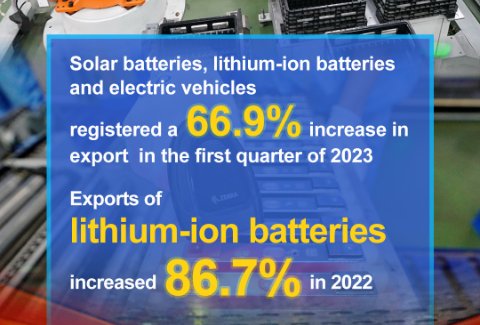
According to Ma Jun, Chair of the Green Finance Committee under the China Society for Finance and Banking, the catalogue helps clarify how financial resources can support China's so-called “New Three” industries—solar power, wind power, and electric vehicles—whose cost competitiveness and scale are now among the strongest globally.
“We've built the largest green bond market in the world,” Ma noted. “These tools have played a central role in scaling up emerging green industries—photovoltaics, wind, EVs, batteries—which have now taken the global lead in both volume and efficiency.”
By the Numbers: China's Expanding Green Finance Market
As of Q1 2025, the scale of China's green finance footprint continues to grow:
Green loan balances reached RMB 40.6 trillion(~USD 5.6 trillion),
Outstanding green bonds stood at RMB 2.13 trillion,
Cumulative green bond issuance exceeded RMB 4.33 trillion, and
Transition loansin pilot regions have already hit RMB 55 billionby end-May.
The People's Bank of China is also preparing industry-specific transition finance standards for shipping, chemicals, and five other high-emission sectors, with the aim of encouraging financial institutions and corporates to develop credible decarbonization plans backed by scalable financial instruments.
“Transition finance could be the fastest-growing segment in the coming years,” said Ma. “Its market size might even surpass that of traditional green finance, potentially doubling year-on-year in the near future.”
Aligning Standards to Lower Barriers and Risk
One key feature of the 2025 catalogue is the streamlining of green project recognition across product types and financial markets. This brings practical benefits:
Investorsgain greater confidence in asset classification,
Bankscan process green lending with fewer ambiguities,
Regulatorscan promote consistent disclosure and risk evaluation.
The catalogue also outlines a transitional arrangementfor projects and bond issuances already in the approval pipeline: projects approved before the catalogue's effective date can still rely on earlier definitions, while those under review may choose which standard to follow. However, issuers are encouraged to voluntarily alignwith the new standard in disclosure and impact reporting.
Parallel to this, pilot programs in regions like Guangdong, Shanghai, and Zhejiang are testing sustainability data reporting for SMEs, aiming to give smaller firms better access to green finance by quantifying their environmental performance.
Implications for Global Financial Institutions and Investors
For non-Chinese stakeholders—including multinational banks, asset managers, ESG research firms, and law and accounting professionals—this move offers both strategic clarity and operational guidance.
Clearer taxonomy alignment: Foreign investors seeking to buy green bonds or co-finance projects in China will benefit from a unified classification system that more closely mirrors global practice.
New opportunities in transition finance: Global firms with exposure to high-carbon sectors in China can now explore labelled financing options that align with sector-specific decarbonization pathways.
Professional services demand: The updated framework increases the need for ESG assurance, impact evaluation, and legal structuring services to support compliant financial products.
Cross-border cooperation: As China strengthens green finance norms, opportunities may rise for co-developed standards or mutual recognition schemes with jurisdictions such as the EU, Singapore, or the UK.
At a time when global ESG capital is increasingly demanding precision, China's 2025 catalogue reduces ambiguity—not just for domestic markets, but for cross-border financial collaboration as well.
Final Reflection
The launch of the 2025 Green Finance Catalogue may seem administrative on the surface, but its implications run deep. It anchors a more sophisticated phase in China's financial green transition—where clarity, inclusiveness, and scalability matter just as much as ambition.
As green and transition finance continue to blend, and as global players seek reliable taxonomies to back sustainable investment, China's approach will be watched closely—not just for what it funds, but for how it defines the future of sustainable finance.




































First, please LoginComment After ~