





Beijing's First Comprehensive Bonded Zone for “New Quality Productive Forces” Nears Full Operation
This article contains AI assisted creative content
Beijing's E-Town Comprehensive Bonded Zone (E-Town CBZ), the first in China explicitly themed around “new quality productive forces,” has passed its preliminary inspection and is set to begin full customs-closed operations. This development marks Beijing's fourth CBZ and reflects the city's strategy to integrate advanced manufacturing with high-end services.
A Compact Zone with Strategic Focus
Approved by the State Council in September 2024, the E-Town CBZ covers 0.61 square kilometers in the Changziying Industrial Zone, adjacent to the Beijing Economic-Technological Development Area (Yizhuang). The first phase, with 100,000 square meters of industrial facilities, has been completed.
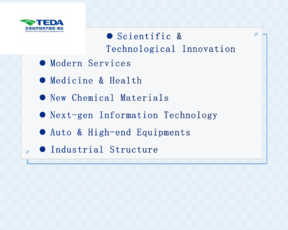
The zone will focus on four priority industries: next-generation information technology, high-end and new-energy vehicles, biotechnology and healthcare, and robotics with intelligent manufacturing. Complementary “bonded +” service trade activities—such as logistics, R&D, and testing—are being developed to support these sectors.
Early Business Interest
TWO
So far, 80 companies have expressed interest in entering the zone, with 30 projects confirmed. These range from semiconductor testing and assembly, bonded pharmaceutical R&D, to cross-border e-commerce logistics and supply chain management.
Executives cite cost savings and time efficiencies as primary drivers. For example, Yunhao Vehicle Group, a commercial vehicle solutions provider, noted that assembling imported parts within the bonded zone can reduce export preparation time by up to two weeks, while cutting expenses. JD.com, through its cross-border business unit, expects faster clearance procedures could allow some goods ordered online by consumers to be delivered within the same day.
Policy and Operational Support
THREE
The CBZ model provides enterprises with “bonded, duty-free, and tax rebate” advantages. Beijing Customs has pledged to offer tailored supervision models for different industries and to expand smart regulation, including applications of AI, digital twins, and unmanned warehousing. Officials emphasized that these innovations aim to create a closed-loop supervision system while facilitating business efficiency.
Part of a Larger Network
FOUR
E-Town joins three other CBZs in Beijing:
Zhongguancun CBZ, focusing on frontier R&D in sectors such as semiconductors, new energy, and pharmaceuticals.
Tianzhu CBZ, leveraging proximity to the airport to support cross-border e-commerce, rare disease drug distribution, and service trade.
Daxing International Airport CBZ, unique for spanning multiple jurisdictions, specializing in biopharmaceutical trade and bonded R&D.
Together, these zones represent Beijing's “four zones, two airports” open-economy framework, complementing the city's free trade pilot zone. Between 2021–2023, Beijing attracted USD 45.55 billion in actual foreign investment, accounting for 8.7% of the national total. In the first eight months of 2025, its pilot zones contributed 33.6% of utilized foreign investment, despite covering less than 1% of the city's area.
Implications for Global Businesses
FIVE
For multinational companies, Beijing's evolving CBZ network offers:
Supply chain efficiency: Reduced customs clearance times and duty advantages for manufacturing and re-export.
R&D opportunities: Platforms for bonded research and testing in pharmaceuticals, semiconductors, and advanced manufacturing.
Market access: Participation in China's high-end consumption and digital economy through bonded cross-border trade channels.
As global trade faces persistent uncertainty, Beijing's bonded zones are being positioned as platforms where international firms can align with China's industrial upgrading while optimizing cross-border operations.



























First, please LoginComment After ~