




Qingdao FTZ at Six: From Trade Experimentation to a Prospective Northern Free Trade Port
This article contains AI assisted creative content
As the Qingdao Area of the China (Shandong) Pilot Free Trade Zone (Qingdao FTZ) marks its sixth anniversary on August 31, 2025, the city emerges as a potential northern gateway for China's next free trade port. Over six years, Qingdao has shown how policy innovation, advanced infrastructure, and international connectivity can create a platform attractive to global investors, logistics operators, and financial institutions.
Since its 2019 establishment, the FTZ has introduced 358 institutional innovations, with 97 adopted nationally or provincially. Initiatives like the “Movable Collateral Financing” model and “Enterprise-Owned Tank Container Customs Clearance” reform highlight the zone's focus on trade facilitation and financial efficiency. Its share of Qingdao's foreign trade rose from 16% to 20%, topping Shandong's three FTZs, while foreign investment utilization more than doubled from 4.1% to 9.7%. The zone has welcomed 96 new Fortune Global 500 projects, 724 domestic ventures over 100 million yuan, and 90 foreign projects above $10 million. Value-added per square kilometer climbed 61% to 1.37 billion yuan ($192 million).
Qingdao's ports and logistics are integral to its FTZ success. The zone hosts Northern China’s largest ship trading market, with 1,700 cross-border vessel transactions, and Qingdao Port’s automated terminals repeatedly set global handling records. Sea-rail intermodal throughput leads the nation, while customs innovations improved clearance efficiency by over 30%. Commodity trading and e-commerce initiatives further amplify trade reach: occupying just 0.13% of national FTZ land, it contributes 2.1% of total FTZ imports and exports.
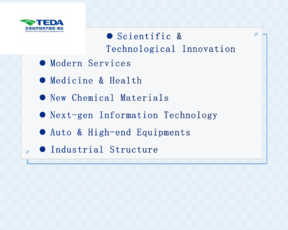
The “10+1” industrial system—spanning integrated circuits, intelligent manufacturing, and life-health sectors—demonstrates technological depth. The integrated circuit park attracts 48 projects totaling over 180 billion yuan, while intelligent home appliance clusters achieve per-acre output four times the provincial average. Life-health initiatives, including BGI's marine microbial genome database, underline Qingdao's global biotech influence, with 14,500 patents authorized and 92 innovation platforms established.
International cooperation is central. The Sino-German Ecopark and SCO demonstration zone enable industrial collaboration and trade services. In early 2025, 239 TIR international vehicles departed the SCO zone—a 134% year-on-year increase—while 32 regular rail routes connect Qingdao to 23 SCO and Belt & Road countries. Inland ports and Yellow River routes facilitate over 2 billion yuan in production-supply matches.
Looking forward, Qingdao aims to become a northern free trade port. Unlike a free trade zone, a free trade port offers broader customs, financial, and investment freedoms, aligning with international practices. Plans for an “SCO Free Trade Airport” at Qingdao Jiaodong International Airport illustrate how air cargo networks and industrial clusters will be leveraged to attract global trade and investment. For investors, logistics firms, and technology partners, Qingdao represents a proving ground for engaging with China’s northern high-openness corridor and a potential next free trade port.


























First, please LoginComment After ~