





Brazil Emerges as China's Third-Largest Cross-Border Investment Destination, Signaling Deepening Bilateral Economic Ties
This article contains AI assisted creative content
Brazil has risen to become the third-largest destination for Chinese outbound investment globally, underscoring the strengthening economic and industrial cooperation between the two nations.
Recent developments illustrate the breadth of this engagement. On August 26, JD Industrial signed a strategic partnership with Brazil's BR Supply to expand digitalized industrial supply chain services. The collaboration enables integrated system connectivity to increase market reach, provide office and industrial materials to Chinese enterprises operating locally, and extend JD Industrial's cross-border industrial services to Brazilian manufacturers.
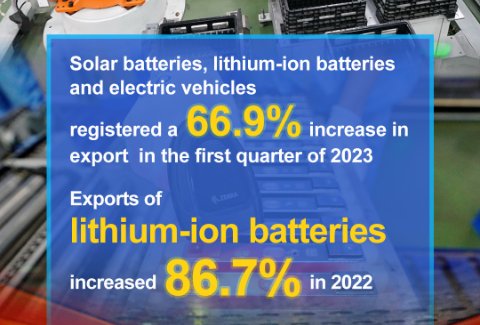
According to research by the China-Brazil Entrepreneurs' Committee (CEBC), Chinese direct investment in Brazil reached USD 4.2 billion in 2024, doubling the previous year and marking a shift from the 2015–2019 investment pattern, which focused on a few mega-projects in oil and power. The current investment wave spans 39 medium- and small-scale projects across diversified sectors including solar and wind energy, lithium batteries, electric vehicles, 5G networks, data centers, logistics, and food delivery platforms. Major companies such as CATL and BYD have announced plans to build battery and vehicle manufacturing facilities in Bahia and Minas Gerais, laying the foundation for a full “lithium—cathode materials—vehicle—recycling” industrial chain in northeastern Brazil. Meanwhile, Meituan and Didi have entered the Brazilian market for the first time, reflecting broader commercial diversification.
Brazilian authorities view China's investment as a lever for reindustrialization. During President Lula's 2024 visit to China, bilateral relations were elevated to a “comprehensive strategic partnership”, with cooperation mechanisms established in areas such as local currency settlements, semiconductors, and low-carbon transportation. In parallel, rising tariffs on US steel and ethanol have increased the relative attractiveness of Chinese capital, supporting the ongoing rebalancing of foreign investment inflows.
Financial cooperation has advanced in tandem. In May 2025, the central banks of China and Brazil renewed a five-year bilateral currency swap agreement worth RMB 190 billion / BRL 157 billion, providing long-term liquidity support. Complementary agreements were signed on anti-money laundering and counter-terrorist financing intelligence sharing, cross-border payment connectivity—including QR code payment integration—and local currency trade settlement. These initiatives mark a transition toward full operational collaboration in financial channels between the two nations.
A notable milestone came in October 2024 when Bank of China (Brazil) executed the first fully RMB-denominated, RMB-settled, RMB-financed, and BRL-converted cross-border trade transaction. The pilot project involved Brazilian pulp giant Eldorado, enabling immediate settlement in BRL while bypassing USD, thereby reducing exchange rate and conversion costs. Currently, ICBC, Bank of Communications, and Bank of China serve as RMB clearing banks in Brazil, supporting trade, services, and investment settlements in both RMB and BRL.
Looking ahead, China's next wave of investment in Brazil is set to target infrastructure and high-tech projects such as the Amazon Economic Corridor, Savanna-Maranhão Port Railway, and Pernambuco Semiconductor Park. While the US remains Brazil's largest foreign investor, China's diversified and strategically timed investment positions it as a new growth driver in Latin America. With supportive local policies and continued industrial integration, Chinese capital is expected to play a key role in reshaping Brazil's manufacturing landscape, driving reindustrialization and green transformation.

































First, please LoginComment After ~