





Hong Kong Businesses Navigating Chinese Mainland E-commerce Retail Market - Case Studies
Executive Summary
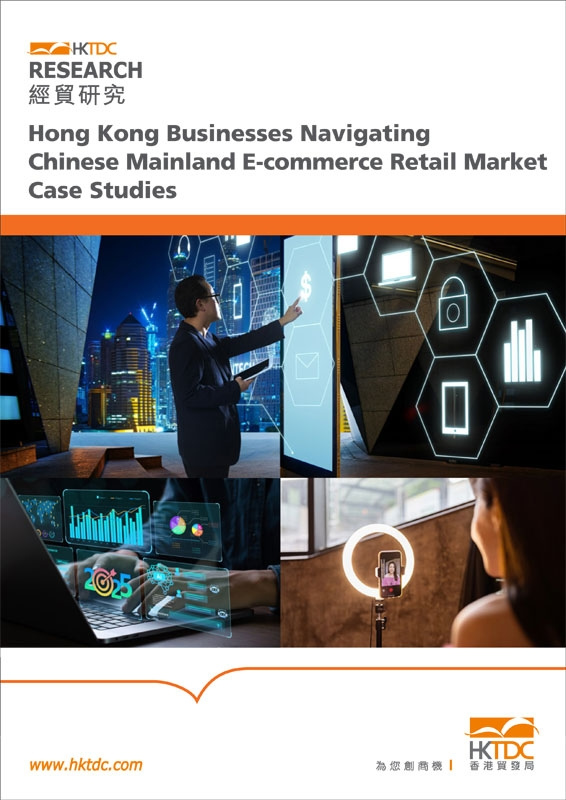
Please click the image to download the Executive Summary.
Chinese Mainland’s e‑commerce retail market is flourishing, a fact well recognised by Hong Kong companies, which see view the mainland as the world’s most promising e‑commerce growth market.[1] In 2024 HKTDC Research commissioned a research agency to conduct a questionnaire survey of middle‑class or above consumers in different mainland cities to learn about their online consumption habits and better understand the mainland e‑commerce retail market.[2]
Selected companies engaged in e‑commerce and related service suppliers on the mainland were also interviewed as part of this research project. These interviews focussed on important considerations for running an e‑commerce retail business, with the findings serving as reference for Hong Kong companies to devise strategies for tapping the mainland e‑commerce retail market.
The mainland e‑commerce sector is highly developed, with various platforms taking a variety approaches to the market, offering goods and winning customers in different ways. For example, “shelf‑based” e‑commerce platforms offer a comprehensive range of goods, mainly operating on a “people looking for goods” sales model. By contrast, the emerging “interest‑based” platforms rely on marketing approaches such as short videos, live‑streaming and blog posts to grow fast, becoming a key strategy for companies to increase online traffic.
In addition, various types of service suppliers have sprung up in the market. For example, multichannel network (MCN) agencies offer services such as influencer matchmaking, marketing content planning and production, and fan management. These agencies can help Hong Kong businesses lacking experience operating on the mainland solve problems such as identifying suitable influencers to endorse products, ensuring quick logistics, providing customer service and helping companies comply with mainland regulations.
Key finding of HKTDC’s interviews with these mainland corporations are as follows:
Full-channel operation boosts competitiveness
- There are innumerable different types of e-commerce platforms on the mainland, each with unique features. Where resources allow, a company could consider promoting and operating e-commerce both on both traditional e-commerce platforms and novel social media and live-streaming platforms. This will ensure that products can reach diverse consumer groups, gaining an additional advantage amid fierce market competition.
- Businesses can leverage traditional e-commerce platforms’ advantages in mature operating systems to target older consumers, emphasising brand building and maintaining a loyal customer base. At the same time, they can use emerging platforms to generate network traffic and, by releasing different types of promotional content, strengthen engagement with young consumers and enhance brand loyalty.
- It should be noted that companies must thoroughly understand and comply with e-commerce platforms’ operating rules, adapting flexibly and responding quickly to their frequently changing policies and traffic algorithms.
Use influencer marketing to drive traffic
- Online traffic is the key to attracting potential customers. Companies may consider collaborating with various key opinion leaders (KOLs) to carry out promotions, or launch influencer marketing, partnering with online content creators who have large followings. For example, they can acquire online traffic and increase product exposure through livestream selling or short videos.
- When hiring KOLs or collaborating with influencers, companies do not necessarily have to look for the hottest influencer to be their brand spokesperson. In addition to avoiding excessively high outlays that may not be recovered by revenues, over-reliance on trending influencers may not bring lasting sales results.
- Companies may have to make decisions based on comprehensive market analysis and brand strategies. This includes choosing KOLs or influencers who specialise in their product fields as spokespersons and making good use of their expertise in selling specific products. This can enhance promotional targeting and achieve the best marketing results.
- Companies may also seriously consider collaborating with multi-channel network (MCN) agencies and capitalise on their related services, such as using their recommended specialist influencers for specific products and services, producing online marketing content and signing up influencers. This will take full advantage of influencer marketing to achieve cost-effective product promotion.
Satisfy consumer demand for fast and accurate delivery
- Mainland consumers generally want highly efficient delivery services, hoping to receive their purchases shortly after placing an online order. Some are used to taking delivery of products even before some livestreaming content is finished. Ensuring quick delivery and avoiding negative customer comments over delivery delays are important considerations for online businesses.
- Companies should make suitable delivery and warehousing arrangements. For instance, they should consider using third-party logistics service provider distribution to optimise order handling. This will offer consumers comprehensive, timely and efficient delivery services, thereby gaining an advantage in a fiercely competitive market.
- Many e-commerce companies collaborate with logistics service suppliers in establishing warehouse networks in chosen locations for a “front-end warehouse” model, dispatching products from multiple warehouses. By keeping merchandise in front-end warehouses near client locations consumers can take delivery shortly after placing orders. This will meet the quick delivery times expected by mainland consumers and enhance their satisfaction with online shopping.
Pay attention to consumer rights and industry regulation compliance
- Mainland regulations and e-commerce platforms attach a great deal of importance to protecting consumer rights, including returns/order cancellation, as well as payment terms (such as arrangements and time limit for refunds). Also, under laws and regulations that protect consumer privacy (including personal information), companies must ensure that their e-commerce business complies with relevant regulations to avoid being penalised for violations.
- The mainland government has strict regulations on e-commerce. In marketing, for example, companies’ and influencers’ promotional activities must not violate relevant government rules. This includes ensuring truthful livestreamed content and accuracy in advertising and promotions. It is important to avoid exaggerated claims, or face penalties as well as possible damage to company reputation.
- For e-commerce businesses and brands that have recently entered the market, companies might consider collaborating with local service providers to acquire the necessary industry knowledge and avoid mistakes. Partnering with experienced local players can also help companies ensure business compliance.
Please click to download the Executive Summary.
[1] For details, please refer to Unleashing the Lucrative Potential of Cross-border E-commerce for Hong Kong Traders (Company survey and expert opinion)
[2] For details of the current consumer questionnaire survey, please refer to Hong Kong Businesses Navigating Chinese Mainland E-commerce Retail Market – Consumer Survey Results.



































First, please LoginComment After ~