





From Experiment to Engine: How ChiNext Became China's Innovation Powerhouse
This article contains AI assisted creative content
When China launched the ChiNext board in 2009, few imagined it would grow into a major force shaping the country's innovation economy. Sixteen years later, what began as a small-cap growth market has evolved into a vital platform driving industrial transformation, technological upgrading, and the rise of globally competitive enterprises.
As of late October 2025, ChiNext hosts 1,389 listed companies with a combined market capitalization exceeding RMB 17 trillion (USD 2.39 trillion) — a figure that now rivals major mid-cap markets in Asia. The presence of flagship firms such as CATL, Mindray, and East Money Information illustrates how the board has shifted from serving as a funding channel for start-ups to becoming a launchpad for national champions in advanced industries.
The first half of 2025 confirmed ChiNext's growing strength. Listed companies generated a combined RMB 2.05 trillion in operating revenue, up 9% year-on-year, while net profits rose 11% to RMB 150.5 billion. Excluding one-off items, core earnings expanded 11.8%. These metrics placed ChiNext among the best-performing segments in China's A-share market.
What stands out is not just growth, but its composition. Companies in new energy, biopharmaceuticals, and high-end equipment manufacturing accounted for much of the gains, signalling a steady migration of China's capital markets toward innovation-led sectors. In many ways, ChiNext has become a real-time indicator of the country's economic rebalancing.
TWO
-
If capital defines the market, R&D defines ChiNext. The board's listed companies invested an average of 4.89% of their revenue into research and development during the first half of 2025 — more than double the overall market average.
-
The result is visible in industrial breakthroughs. CATL has continued to push the frontier of power battery technology, setting global benchmarks in performance and cost efficiency. Mindray, once a follower in the medical devices field, has developed proprietary CT and MRI technologies, ending decades of reliance on foreign suppliers. Together, these firms illustrate how ChiNext's ecosystem rewards technological originality over scale alone.
THREE
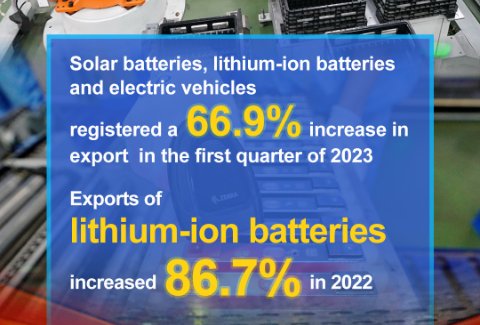
ChiNext companies are also looking beyond domestic borders. Overseas revenues rose 21% year-on-year in the first half of 2025 — a pace far exceeding domestic growth. Exports of new energy vehicles, solar modules, and precision instruments are expanding rapidly, while an increasing number of companies are establishing R&D and manufacturing bases in Belt and Road countries.
These moves are not simply about market diversification; they represent a shift in China's participation in global value chains — from contract manufacturing to standard-setting. ChiNext's firms are increasingly part of a transnational network of innovation, transferring both technology and business models outward.
FOUR
Yet the board's evolution has not been without growing pains. Structural weaknesses persist, reflecting broader tensions within China's innovation economy.
Financial fragility remains an issue: 94 companies have debt-to-asset ratios exceeding 70%, exposing leverage risks. Industrial self-sufficiency is uneven, with many firms still relying on imported components or equipment. And despite headline R&D figures, innovation resources remain concentrated among larger players, while smaller firms struggle with commercialization and cross-sector collaboration.
Governance gaps also pose concerns. Inconsistent disclosure, occasional financial irregularities, and weak internal controls have at times eroded investor confidence. For ChiNext to sustain credibility, strengthening transparency and regulatory discipline will be as important as nurturing innovation itself.
FIVE
Looking ahead, regulators are expected to deepen institutional reform to consolidate ChiNext's role as a breeding ground for “new quality productive forces.”
Likely measures include:
-
Elevating technological innovation metrics — such as R&D intensity, patent quality, and team stability — in IPO evaluations.
-
Enhancing market connectivity between ChiNext, the NEEQ, and regional equity markets to create a seamless financing continuum.
-
Encouraging M&A-driven consolidation to lengthen industrial chains and improve capital efficiency.
-
Diversifying trading mechanisms, including ETF options and more flexible share lock-up rules, to attract long-term institutional investors like pension and insurance funds.
-
Strengthening tax and IP incentives, and expanding equity-based compensation to retain top talent.
-
Tightening disclosure standards and leveraging regtech tools to curb misconduct and better protect minority investors.
Together, these initiatives could fortify the board's market infrastructure while ensuring it continues to channel capital toward productive innovation rather than speculative cycles.








































First, please LoginComment After ~