





Hong Kong’s Capital Market: Stability, Strategy
This article contains AI assisted creative content
In a recent address at Beijing’s Financial Street Forum, Dr. Wong Tin Yau, Chairman of Hong Kong’s Securities and Futures Commission (SFC), outlined key developments in Hong Kong’s capital markets and their strategic importance for international investors and institutions. His remarks highlighted resilience, growth in key sectors, and deepening ties with mainland China—factors with direct relevance to foreign financial firms and multinationals.
ONE
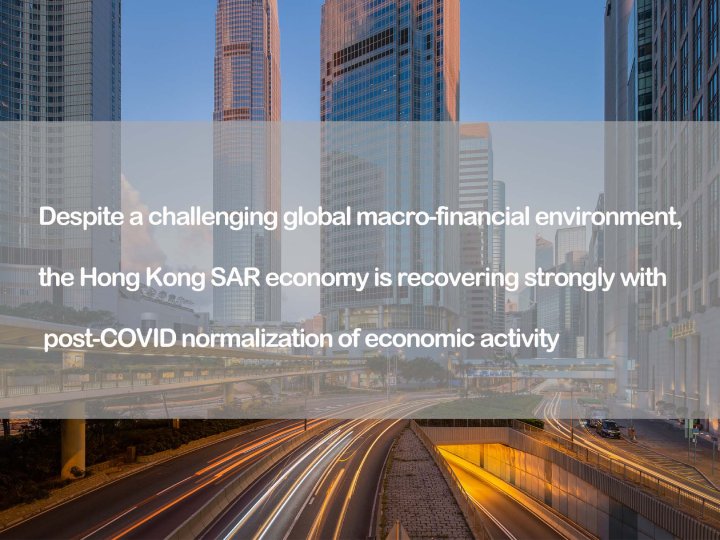
Dr. Wong emphasized Hong Kong's “formidable resilience,” noting that during significant global volatility in April 2025, the market saw no default, manipulation, or systemic risk events. This stability, he explained, stems from a long-established regulatory framework designed to protect investors and maintain confidence—a critical assurance for foreign institutions operating in or through Hong Kong.
TWO
While Hong Kong's IPO market remains robust—raising HKD 180 billion in the first three quarters of 2025, up 200% year-on-year—the real story may lie in secondary markets. Follow-on offerings and placements surged 270%, reaching HKD 260 billion, reflecting the market's depth and ability to support companies throughout their growth cycles. Average daily turnover also rose over 90%, with total market capitalization approaching HKD 50 trillion.
THREE
A significant development for asset managers and fixed-income investors is the joint SFC-HKMA “Fixed Income and Money Market Development Roadmap.” This initiative aims to build out yield curves, expand bond tenors, and position Hong Kong as a global fixed income hub. For international investors, this signals a welcome diversification beyond equities and into more predictable income-generating assets.
FOUR
Dr. Wong positioned Hong Kong as the international platform for Beijing’s financial and corporate expansion. The memorandum of understanding between the Beijing and Hong Kong stock exchanges is exploring cross-border listings—a move that could simplify access for foreign capital to mainland innovators and state-owned enterprises.
He also encouraged more Beijing-based financial institutions to establish a presence in Hong Kong, a trend that will deepen liquidity, broaden product offerings, and create partnership opportunities for foreign banks, law firms, and advisory groups.
































First, please LoginComment After ~