





Legal Trends in the Private Equity Fund Industry (October 2025/Issue 92)
State-owned Fund Research Center Legal Services Update
Attorney Yang Chunbao's team assisted Pudong Angel Mother Fund in participating in the establishment of a clinical transformation seed fund. The clinical transformation seed fund was established with Pudong Angel Mother Fund (hereinafter referred to as the "Angel Mother Fund") under Pudong Venture Capital as a cornerstone investor, and Futeng Capital under Shanghai Guotou serving as the fund manager. Entrusted by the Angel Mother Fund, Attorney Yang Chunbao's team conducted comprehensive legal due diligence on Futeng Capital and the clinical transformation seed fund, and participated in the drafting, review, and negotiation of the limited partnership agreement and related transaction documents for the clinical transformation seed fund.
Attorney Yang Chunbao's team was entrusted by a well-known private equity fund manager to represent multiple funds under its management in suing the heirs of the founding shareholder of a portfolio company. According to the relevant investment agreements, the share repurchase obligation of the portfolio company's founding shareholder had been triggered, but the shareholder had passed away. Therefore, Attorney Yang's team filed a lawsuit on behalf of the funds against the heirs for disputes over the settlement of the decedent's debts.
Attorney Yang Chunbao's team was entrusted by a well-known private equity fund manager to systematically review and assess potential risks in the contract terms of its managed funds and provide recommendations for compliant operations.
Attorney Yang Chunbao's team was entrusted by a well-known private equity fund manager to assist in formulating an employee co-investment system.
Attorney Yang Chunbao attended the Dacheng Northwest-Shanghai Professional Co-construction Meeting and analyzed the key offensive and defensive points for both parties in valuation adjustment mechanism (VAM) cases, along with corresponding legal advice, based on a case he handled.
Attorney Yang Chunbao attended the Yangtze River Delta Capital Market Forum and delivered a keynote speech titled "Offense and Defense in VAM Repurchase".
Association Announcements and Notices
On October 17, 2025, and October 24, 2025, the Asset Management Association of China (hereinafter referred to as the "Association") issued announcements stating that 14 private fund managers, including Shanghai Maidao Private Fund Management Co., Ltd., were operating abnormally and failed to submit compliant special legal opinions within 3 months after the written notice was issued. The Association will cancel the private fund manager registration of these 14 institutions.
On October 17, 2025, the Association issued an announcement stating that it was unable to establish effective contact with 10 private fund managers, including Panjin Haibo Equity Investment Fund Management Co., Ltd. The aforementioned managers should promptly submit situation reports. Failure to do so within the time limit will result in the Association deeming them missing and making a public announcement. If the situation is not rectified one month after the public announcement, the Association will cancel their private fund manager registration.
Legal, Regulatory, and Judicial Updates
Association Releases Revised "Private Investment Fund Filing Guidelines No. 3 - Change of Manager for Private Investment Funds"
On October 24, 2025, the Association announced the revised "Private Investment Fund Filing Guidelines No. 3 - Change of Manager for Private Investment Funds" (hereinafter referred to as the "New Guideline No. 3"), which took effect upon announcement. The main revisions of the New Guideline No. 3 include:
(1) Respecting Party Autonomy: It allows private fund investors to separately agree on the voting ratio for changing the manager in the contract, while further emphasizing that future fund contracts need to specify specific methods for fund investor meetings to resolve changes of managers, amend or terminate fund contracts early, and liquidate funds in cases where the fund manager is unable or neglects to perform its duties, as well as matters such as the convener, method of convening, voting method, voting procedures, voting ratio, and effective procedures of investor meetings.
(2) Simplifying Document Requirements: It removes some materials and documents that are difficult to provide in practice, such as legal documents for terminating the original fund contract or entrustment management agreement, changing it to require investors to promptly notify the original manager to terminate the management relationship after the resolution; changing the requirement for the custodian to opine on whether the new manager complies with the relevant provisions of the guidelines to the custodian providing a clear opinion on the change of manager matter; adding situations where the original manager does not cooperate in fulfilling the change procedures as a circumstance for special change procedures; introducing notarization and legal opinion procedures for manager changes under special circumstances; for managers during the missing handling period, the process for changing managers of the funds they manage will no longer be suspended.
(3) Clarifying the Basis for Handling: It explicitly includes arbitral awards as one of the bases for the Association to handle manager changes, emphasizing that the Association's handling of manager change matters needs to combine court judgments or arbitral awards with self-regulatory rules.
(4) Expanding the Scope of Application: It allows funds that have entered the liquidation process but have not completed liquidation to change managers, but for company-type and partnership-type funds that have entered enterprise liquidation, a liquidation team shall be established in accordance with the "Company Law" and "Partnership Enterprise Law" to exercise powers during the enterprise liquidation period; conditionally lifting type restrictions on funds involved in risk disposal for manager changes, no longer treating violations of the specialized operation principle and inconsistent business types as reasons for refusing to handle manager changes, to meet the needs of risk resolution.
(5) Focusing on Manager Change: Given that no feasible path has been formed in practice, to avoid disputes arising from the Association's announcement effect, clauses related to the establishment of professional institutions and liquidation teams are deleted. Regarding issues such as the establishment of liquidation teams, the Association will promote the publication of typical cases by judicial authorities for clarification.
CSRC Releases "Several Opinions on Strengthening the Protection of Small and Medium Investors in the Capital Market"
On October 27, 2025, the China Securities Regulatory Commission (CSRC) released the "Several Opinions on Strengthening the Protection of Small and Medium Investors in the Capital Market" (hereinafter referred to as the "Opinions"), proposing eight opinions on strengthening the protection of small and medium investors in the capital market. The Opinions mention strengthening law enforcement collaboration with public security and judicial authorities to jointly combat criminal offenses such as misappropriation of private fund assets; promoting the issuance of judicial policy documents on crimes such as private fund crimes, to provide stronger legal safeguards for protecting the legitimate rights and interests of small and medium investors.
CSRC Chairman Wu Qing Publishes Signed Article "Improving the Inclusiveness and Adaptability of the Capital Market System"
In the recently published "Reader for the 'Proposal of the Central Committee of the Communist Party of China on Formulating the Fifteenth Five-Year Plan for National Economic and Social Development'", CSRC Chairman Wu Qing published a signed article titled "Improving the Inclusiveness and Adaptability of the Capital Market System". Chairman Wu Qing mentioned in the article actively developing private equity and venture capital funds; promoting the smooth cycle of "fundraising, investment, management, and exit" for private equity and venture capital funds, and intensifying efforts to cultivate and expand patient capital, long-term capital, and strategic capital.
Typical Cases
Beijing Financial Court Private Fund Typical Case: L v. A Bank Contract Dispute Case[1]

After the manager becomes missing, investors, by convening a fund shareholders' meeting to authorize representative litigation, claim rights against transaction counterparties associated with the fund, and receive support from the People's Court.
An FOF fund and a No. 1 fund both had A Fund Company as their manager. In 2016, investor L invested 1 million yuan in the FOF fund, which, as a fund-of-funds, invested 28.26 million yuan in its underlying fund, the No. 1 fund. A Fund Company entered into an entrusted loan contract with B Bank and C Company, agreeing that A Fund Company would extend a loan of 50 million yuan to C Company through B Bank. In 2018, A Fund Company was announced as missing by the Association and had its private fund manager qualification revoked. Under these circumstances, the FOF fund shareholders and the No. 1 fund shareholders convened fund shareholders' meetings, resolved to terminate the operation of the FOF fund, establish a liquidation team, and authorize L and others to represent the FOF fund in handling subsequent liquidation and external rights protection matters. Authorized by the FOF fund shareholders' meeting, L, representing the FOF fund, requested B Bank to provide information related to the entrusted loan. B Bank rejected L's claim. L then filed a lawsuit with the court of first instance, requesting an order compelling B Bank to provide the entrusted loan-related information. The court of first instance, after trial, ruled in favor of L. B Bank appealed the first-instance judgment to the Beijing Financial Court.
After trial, the Beijing Financial Court held that the fund shareholders' meeting is the authority of a contractual fund. After the private fund manager of a contractual fund becomes missing, investors can authorize a representative through convening a fund shareholders' meeting to file a lawsuit claiming rights against transaction counterparties associated with the fund . Therefore, the court ultimately dismissed B Bank's appeal and upheld the first-instance judgment. This case provides clear judicial guidance on how to protect investors' legitimate rights and interests through internal governance mechanisms when the fund manager is missing or absent, filling a relevant practical gap and possessing significant rule demonstration value.
Beijing Financial Court Private Fund Typical Case: S Applying for Compulsory Enforcement of an Arbitration Award Against Beijing A Fund Company[2]
Introducing a guarantee mechanism to break the liquidation deadlock, enabling the realization of investment claims while ensuring potential creditors of the fund receive relief.
An arbitral award ruled that Beijing A Fund Company should pay investor S 1 million yuan in fund redemption proceeds using the assets of Fund B it managed. S applied to the Beijing Financial Court for compulsory enforcement based on this award. After investigation, Fund B had no property available for enforcement, and the compulsory enforcement reached a deadlock. Fund B held all the fund shares of Fund C. The remaining property of Fund C after lawful liquidation should be paid to Fund B, which would then be used to pay S the fund redemption proceeds. In this case, the manager of Fund C was missing, and the liquidation was deadlocked. However, without a legal and effective liquidation, Fund C might have potential creditors. Therefore, S provided a guarantee to the Beijing Financial Court and applied for enforcement against the property of Fund C, i.e., if potential creditors of Fund C emerged and claimed rights, S was willing to compensate within the scope of the enforced property of Fund C using its guaranteed assets.
The Beijing Financial Court granted S's application. This case introduced a guarantee mechanism to balance the relationship between the realization of the applicant's investment claim and the relief for potential fund creditors, broke the fund liquidation deadlock, innovated enforcement work mechanisms, and also assisted investment and financing development.
China (Beijing) Securities and Futures Arbitration Center Releases Ten Classic Arbitration Cases: Fund Contract Dispute[3]
Guiding the fund shareholders' meeting to rectify procedural defects, innovatively expanding the effect of the arbitral award to non-participating parties, effectively resolving private fund governance deadlocks.
The private fund manager involved in the case could not perform its duties normally due to violations and criminal involvement. The fund investor in the case convened a fund shareholders' meeting according to the provisions of the fund contract and filed a lawsuit to confirm the validity of the resolution with the Beijing Arbitration Commission, requesting confirmation of the resolution's validity, change of manager, and requiring the fund manager involved to hand over management materials. The fund manager involved argued that the investor did not have the right to sue and that the convening process of the fund shareholders' meeting had procedural defects and should be invalid.
On legal issues, first, the applicant's right to sue was clarified. Since the "Securities Investment Fund Law" does not specify the specific rules for changing the manager of a private fund, and the aforementioned change procedure via a shareholders' meeting was based on contractual agreement, the arbitral tribunal clearly defined the nature of the fund as pooled property, possessing aggregated rights, and the right to sue arises from the contract; second, it was ascertained that in the absence of clear legal basis, all parties agreed to refer to the Company Law Judicial Interpretation IV for review; finally, it was ascertained and clarified that the contract signed by a single shareholder was based on reference clauses from the industry authority and was identical. Regarding the standard of review, the arbitral tribunal clarified the standard for reviewing the resolution acts in the contract of this case. Due to the impact on shareholders not participating in this arbitration, a standard higher than the civil preponderance of evidence standard in contract lawsuits should be adopted. In the fact-finding part, the arbitral tribunal conducted a substantive review of the notarized content of the shareholders' meeting submitted by the applicant, explaining the considerations and judgment standards in the review one by one.
In the first arbitration, the arbitral tribunal dismissed the request because the procedures for convening the meeting and the elements of the resolution act submitted by the applicant were deficient, but provided clear guidance. In the second arbitration, another shareholder reconvened the meeting, used notarization to supplement procedural elements by reference to company resolutions, improved the notification process, and submitted a resolution authorizing arbitration, rectifying the previous issues regarding the right to sue, substance, and procedure. Simultaneously, due to the notification issue for fund shareholders, the applicant, on one hand, demonstrated through detailed steps that it had fulfilled the notification obligation as much as possible, and on the other hand, established an objection procedure. Ultimately, the applicant organized a meeting that met the shareholding ratio stipulated in the contract and obtained 100% consent from the attending votes for changing the manager, with no explicit objections raised. The arbitral tribunal in the second arbitration ultimately supported all of the applicant's requests.
Shanghai Arbitration Commission Case Sharing Issue 11[4]
If the manager of an asset management plan causes investor losses due to breach of fund supervision obligations, it needs to bear corresponding compensation liability. However, if the manager has lawfully and compliantly fulfilled the information disclosure and risk disclosure obligations in the sales process to professional investors, and the asset management contract also提示了风险并在出现违约后采取了部分补救措施, the investor should also bear the corresponding legal consequences for its investment behavior and risks.
F Company established the asset management plan involved. In August 20XX, F Company, as the entrusting party, and J Company, as the entrusted party, signed a "Trust Contract", stipulating that all trust funds would be used to grant loans to Z Company, with relevant guarantors providing joint and several liability guarantee. In November 20XX, Company A signed the "Asset Management Contract" with F Company and B Company (the custodian). On the same day, Company A signed the "Risk Disclosure Statement", and before signing the aforementioned two documents, Company A filled out a "Questionnaire". Referring to the scoring rules, Company A's investment risk tolerance was roughly aggressive. The involved "Asset Management Contract" stipulated that the funds would ultimately be used to supplement Z Company's working capital, with the manager providing Z Company with working capital not exceeding RMB 250 million, of which Company A contributed RMB 150 million to purchase shares of the involved asset management plan. After Company A paid the RMB 150 million as agreed, it received investment returns totaling RMB 13,615,700 from December 20XX to December 20XX. F Company违约 provided the entire RMB 498 million of the involved asset management plan's funds to Z Company for working capital supplementation. Subsequently, Z Company failed to pay interest as agreed. F Company instructed J Company to issue a "Notice Letter" to Z Company and the relevant guarantors, declaring the entire trust loan due immediately. On X month X day, 20XX, F Company instructed J Company to file an arbitration application with the S City Arbitration Commission and apply for preservation with the Beijing Third Intermediate People's Court; the involved asset management plan was terminated in X month 20XX, and a liquidation team was established. As of X month 20XX, Company A had received a total of RMB 6,677,600 in returned principal, with RMB 143 million in principal still unrecovered. Company A believed that F Company failed to fulfill its suitability obligations, conduct sufficient due diligence, supervise funds as agreed, etc., constituting serious breach of contract, and demanded compensation for principal loss and investment return loss, and bearing the arbitration fee. F Company argued that it had fulfilled relevant obligations, the loss was caused by market risks and had no causal link with its own actions, and Company A, as a professional institution, should bear the risks itself.
The respondent's breach of diligent management duty is mainly reflected in failing to reasonably fulfill the responsibility of fund supervision : According to the involved "Asset Management Contract", the manager was to provide Z Company with working capital not exceeding RMB 250 million. If Z Company wanted to obtain further funds later, it needed to provide relevant contracts meeting specified requirements. However, the respondent provided the entire RMB 498 million of the involved asset management plan to Z Company for working capital supplementation, exceeding the agreed limit. Furthermore, the respondent failed to provide evidence proving that Z Company submitted relevant contracts meeting the requirements, nor did it explain the fund usage in the management report, constituting a breach of contract.
The involved asset management plan was terminated and liquidated in X month 20XX, and the applicant only received partial principal return, with the remaining principal not paid out. Although经过 arbitration and compulsory enforcement procedures, the asset management plan's property, after realization, still failed to fully repay the applicant's principal, and there was no evidence indicating a clear timeline for the distribution of remaining property. Therefore, the applicant's loss had objectively occurred. The respondent's failure to perform the fund supervision obligation as agreed, failing to effectively prevent and control risks, although the direct cause of the applicant's loss was the default by Z Company and the guarantors, the respondent's breach of contract had a considerable degree of influence on the occurrence of the loss, and there exists a considerable causal relationship between them. Therefore, the respondent should bear corresponding compensation liability.
The respondent rated the involved asset management plan, clearly stated the product risk level and other information in relevant documents, assessed the applicant's risk tolerance through the "Questionnaire", confirming the applicant as an aggressive investor with medium-high risk tolerance. The applicant also signed and sealed the "Risk Disclosure Statement" and other documents. At this stage (the investor suitability management stage), the respondent had lawfully and compliantly fulfilled the information disclosure and risk disclosure obligations in the sales环节. It needs to be clarified that the "Asset Management Contract" separately stipulated that the manager should disclose the actual use of funds to investors during the operation of the asset management plan, but the respondent failed to fulfill the disclosure obligation regarding the excess lending behavior and the specific details of fund usage. This行为 constituted a breach of the information disclosure obligation during the asset management plan operation stage – the compliance of information disclosure in the aforementioned suitability stage and the breach of information disclosure in this stage belong to different categories of obligations, and there is no contradiction between them. Simultaneously, the applicant, as a professional investor, should understand investment risks. The respondent also提示了风险 in the contract and took some remedial measures after the breach occurred. Therefore, the applicant cannot demand that the entire loss involved be borne by the respondent; the applicant should also bear the corresponding legal consequences for its investment behavior and risks.
Considering the degree of fault of the respondent, the arbitral tribunal determined that the respondent should bear 30% compensation liability for the applicant's principal loss and bear 30% of the arbitration fee in this case. Regarding the claim for investment return loss, since the involved contract did not guarantee returns, and the involved asset management plan had no source of returns after early termination, it was not supported.
[1] Source: WeChat article published by the Asset Management Association of China on October 30, 2025, titled "Beijing Financial Court Releases Typical Private Fund Cases at the 2025 Financial Street Forum Annual Conference".
[2] Source same as footnote 1.
[3] Source: WeChat article published by the official account of the Beijing Arbitration Commission on October 5, 2025, titled "China (Beijing) Securities and Futures Arbitration Center Release | Ten Classic Arbitration Cases (IV): Fund Contract Dispute".
[4] Source: WeChat article published by the official account of the Shanghai Arbitration Commission on October 21, 2025, titled "Shanghai Arbitration Commission Case Sharing | Issue 11: Asset Management Plan Manager Liable for Compensation Due to Breach of Fund Supervision Obligation Causing Losses".
Author Profiles
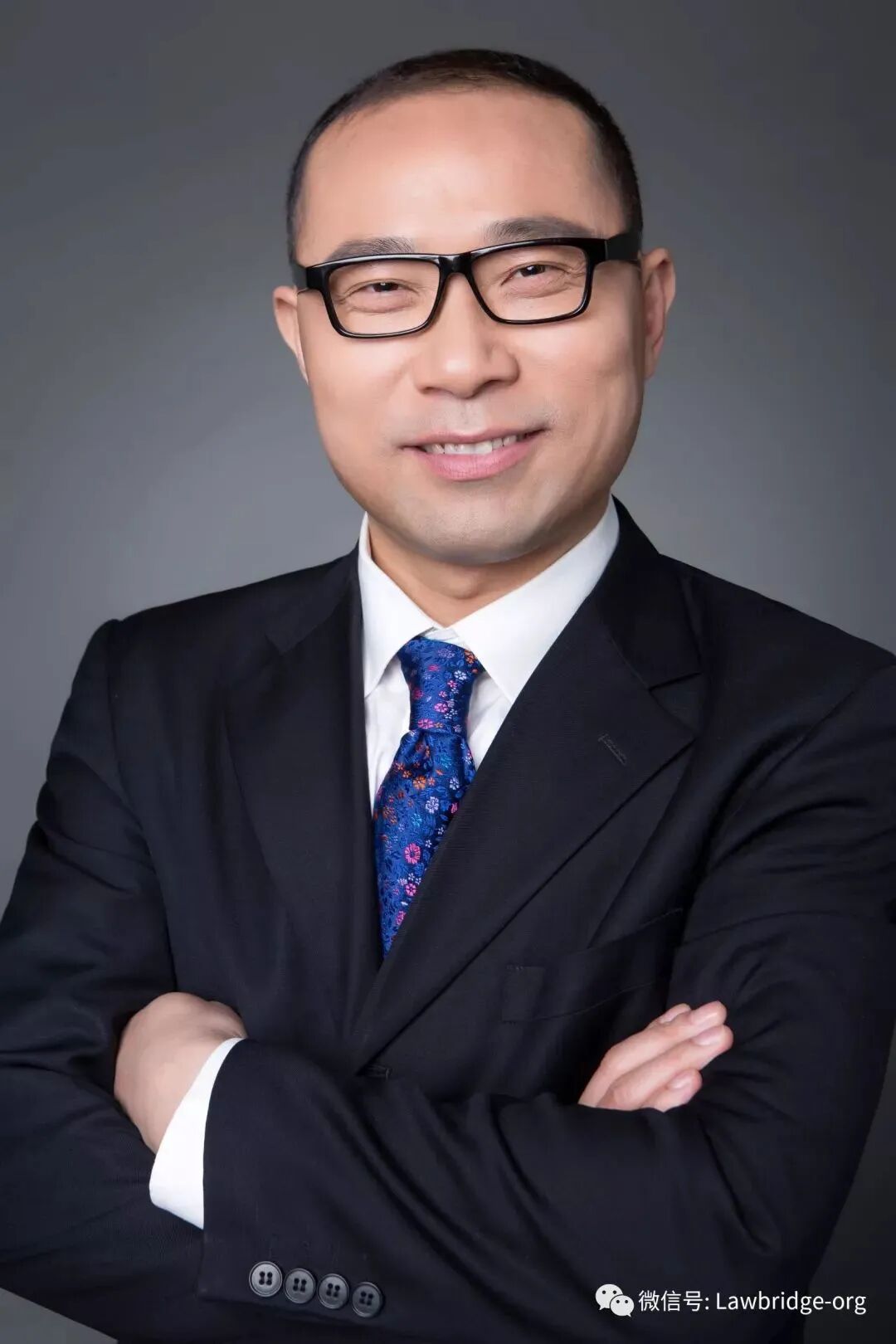
Attorney Yang Chunbao
Senior Partner
(Senior Professional Title)
Mobile:
13901826830
Email:
chambers.yang@dentons.cn
Senior Partner, Head of Capital Market Department, Director of the State-owned Fund Research Center at Dentons (Shanghai) Office, Head of Private Equity and Investment Fund Practice for Dentons China Region, Member of Shanghai Foreign-related Legal Talent Pool. Bachelor of Laws from Fudan University (1992), Master of Laws from University of Technology, Sydney (2001), Juris Master from East China University of Political Science and Law (2001).
Attorney Yang has been practicing law for 30 years, specializing in private funds, investment and financing, mergers and acquisitions, covering industries such as large finance, healthcare, real estate and infrastructure, TMT, exhibition industry, and manufacturing. Since 2004, he has been repeatedly listed in The Legal 500 for "Private Equity" and "Corporate and Commercial", and has been specially recommended or commented on by Asia Law Profiles multiple times. Since 2016, he has been continuously selected by the internationally renowned legal media China Business Law Journal as one of the "Top 100 Lawyers for China Business", awarded the "China Corporate Law Expert of the Year" title by Leaders in Law - 2021 Global Awards; continuously listed in the "Excellent Lawyers & Law Firms Recommended by General Counsel of Well-known Chinese Enterprises". Qualified to serve as an independent director of listed companies, he is an Adjunct Professor at the Law School of East China University of Science and Technology, a Practice Mentor at Fudan University Law School, a Part-time Postgraduate Supervisor at East China University of Political Science and Law, a Lecturer at the Private Equity CEO Class of Shanghai Jiao Tong University, and a Lecturer at the Cross-border Business Talent Training Program of the Shanghai Municipal Commission of Commerce. He has published 16 professional books including "Practical Operation of Risk Prevention and Control for Private Equity Investment Funds", "Practical Operation and Case Analysis of Enterprise-wide Legal Risk Prevention and Control", and "Winning Capital 2: Complete Guide to Corporate Investment and Financing Models and Processes". Attorney Yang's practice areas include: Corporate, Investment M&A and Private Funds, Capital Markets, TMT, Real Estate and Construction, and dispute resolution in the aforementioned areas.
Author Profiles
Attorney Sun Zhen
Partner, Dentons (Shanghai) Office

Email:
sun.zhen@dentons.cn
Before practicing law, Attorney Sun successively served as Executive Assistant to the Global, Asia-Pacific, or China President or Vice President in Fortune 500 companies such as Watts, Ingersoll Rand, and Alcatel-Lucent, accumulating rich experience in enterprise operation and management, and possessing excellent bilingual communication and coordination skills in Chinese and English. Attorney Sun has published "Practical Operation of Risk Prevention and Control for Private Equity Investment Funds" and dozens of articles in the fields of M&A, funds, and e-commerce. Attorney Sun's areas of expertise include: private equity investment, corporate M&A, e-commerce, and labor legal affairs.
Author Profiles
Attorney Li Jiaxin
Attorney, Dentons (Shanghai) Office

Attorney Li graduated from the Law School of Fudan University and focuses on the practice areas of private funds, investment and financing M&A, and corporate legal services. She has provided legal services such as legal due diligence and review of transaction documents for multiple mother funds selecting fund managers and investment fund projects, and for fund investment target company projects. She has provided legal services related to fund fundraising, investment, management, exit, and risk control for multiple private fund managers.
































First, please LoginComment After ~